Data for King County
Communities
Communities


Health of Older Adults in King County Chart Pack: A new data resource that sheds light on the health, well-being, needs, and strengths of older residents in our community. This chart pack offers a comprehensive overview of how local older adults are doing across indicators of social determinants of health, health care access, chronic disease, and end-of-life outcomes.

Empowering Through Data: A Closer Look at Black Community Health: In 2020, King County declared racism a public health crisis, highlighting its harmful impact on the health of Black residents. However, there was no centralized source for Black community health data. Communities Count collaborated with the Black Community Equity Team and Black Providers Network to develop an infographic tailored to the needs of the Black community. This resource aims to make health information accessible, engaging, and impactful for both community members and partners.

Centering Community Voices Through Community-Led Data: Community-led data offers a deeper understanding of health and well-being by centering the lived experiences, cultural knowledge, and priorities of communities themselves. Through partnerships with Indian American Community Services, Community Café Collaborative, and United Communities of Laos, this blog highlights how families across King County define safety, emotional wellness, belonging, and support in their own words.

In partnership with Communities of Opportunity, Communities Count is offering free data and evaluation workshops for community based organizations in King County.
Learn more on our trainings and resources page!
Communities Count is a resource that provides data to support equity work and monitor the health and well-being of King County communities.
Communities Count emphasizes prevention and a long-term view of change while using data to understand how to build and sustain healthy communities and families.
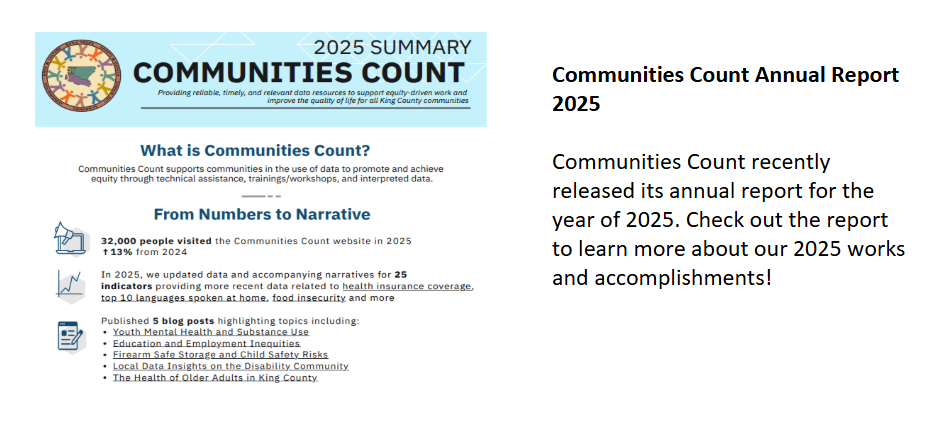
Read about our latest work in our 2025 Annual Report.

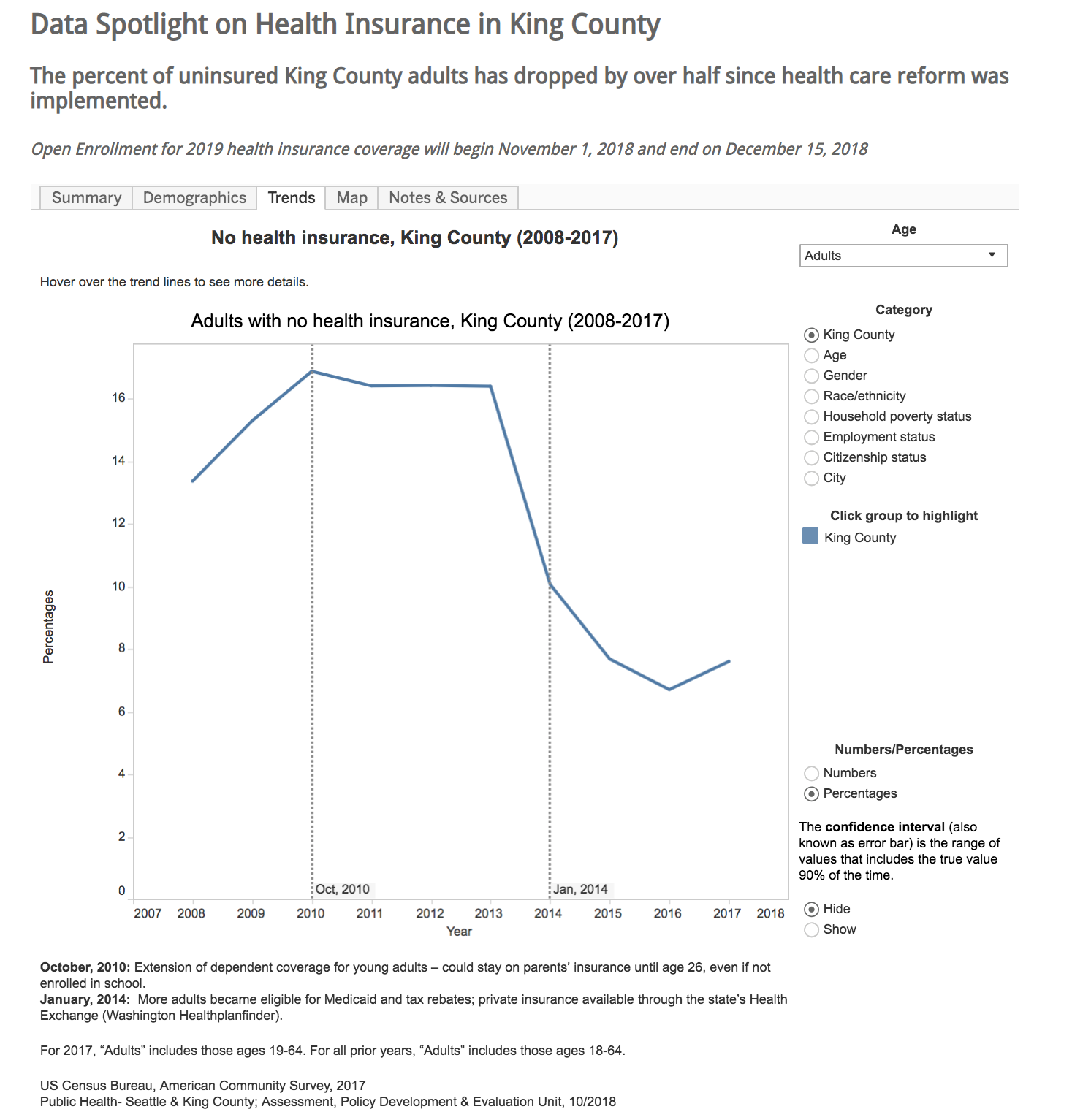
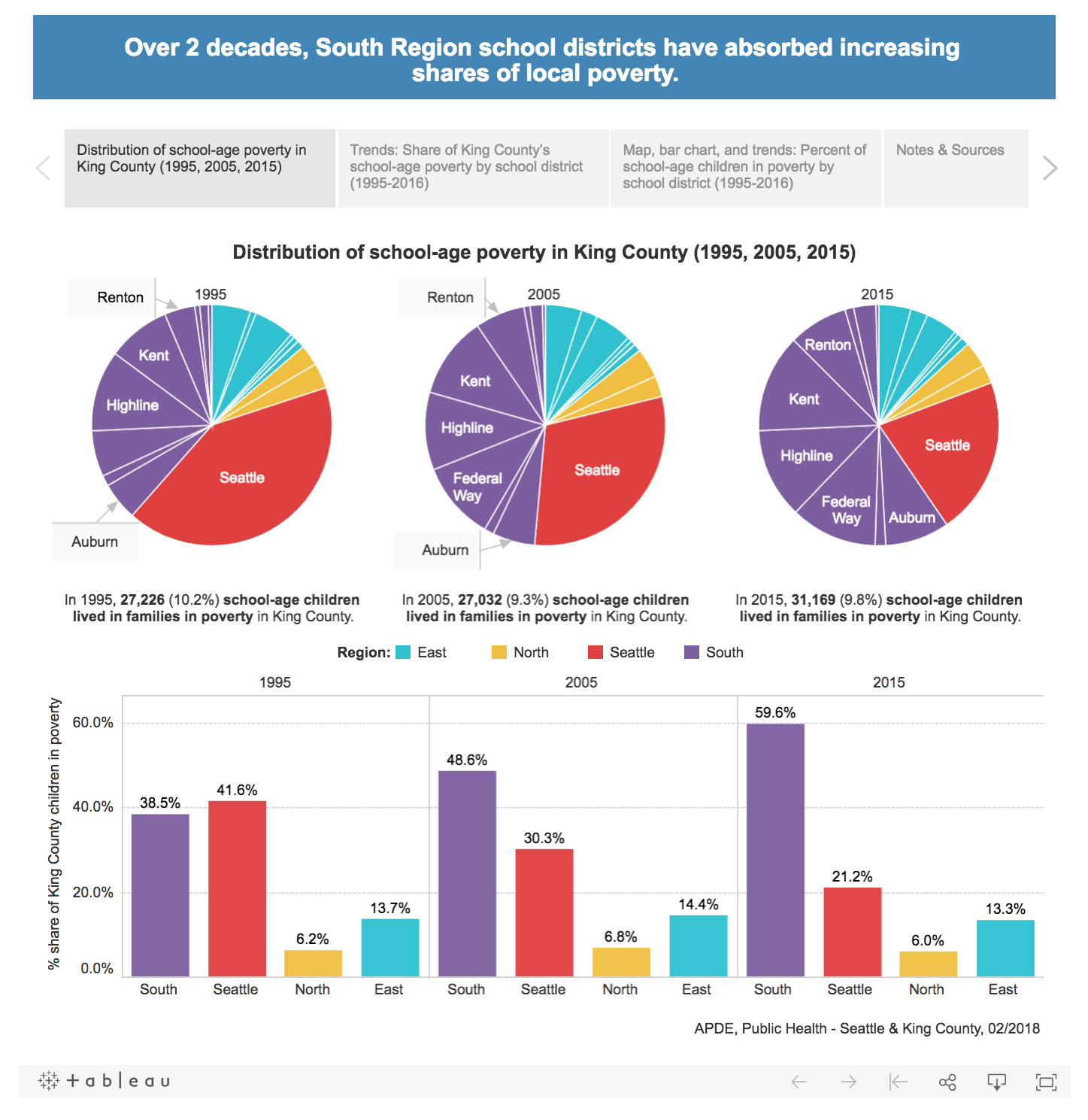
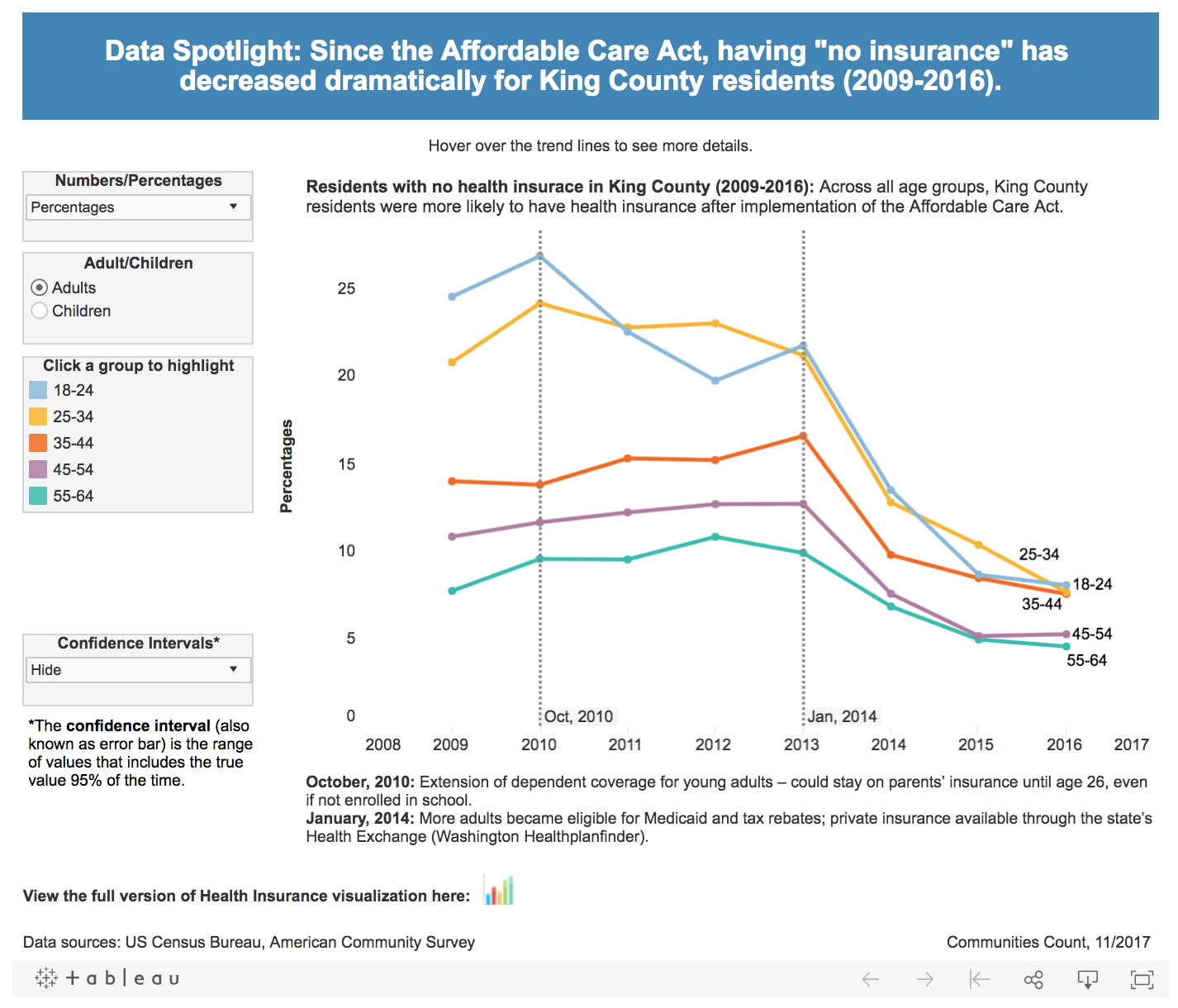
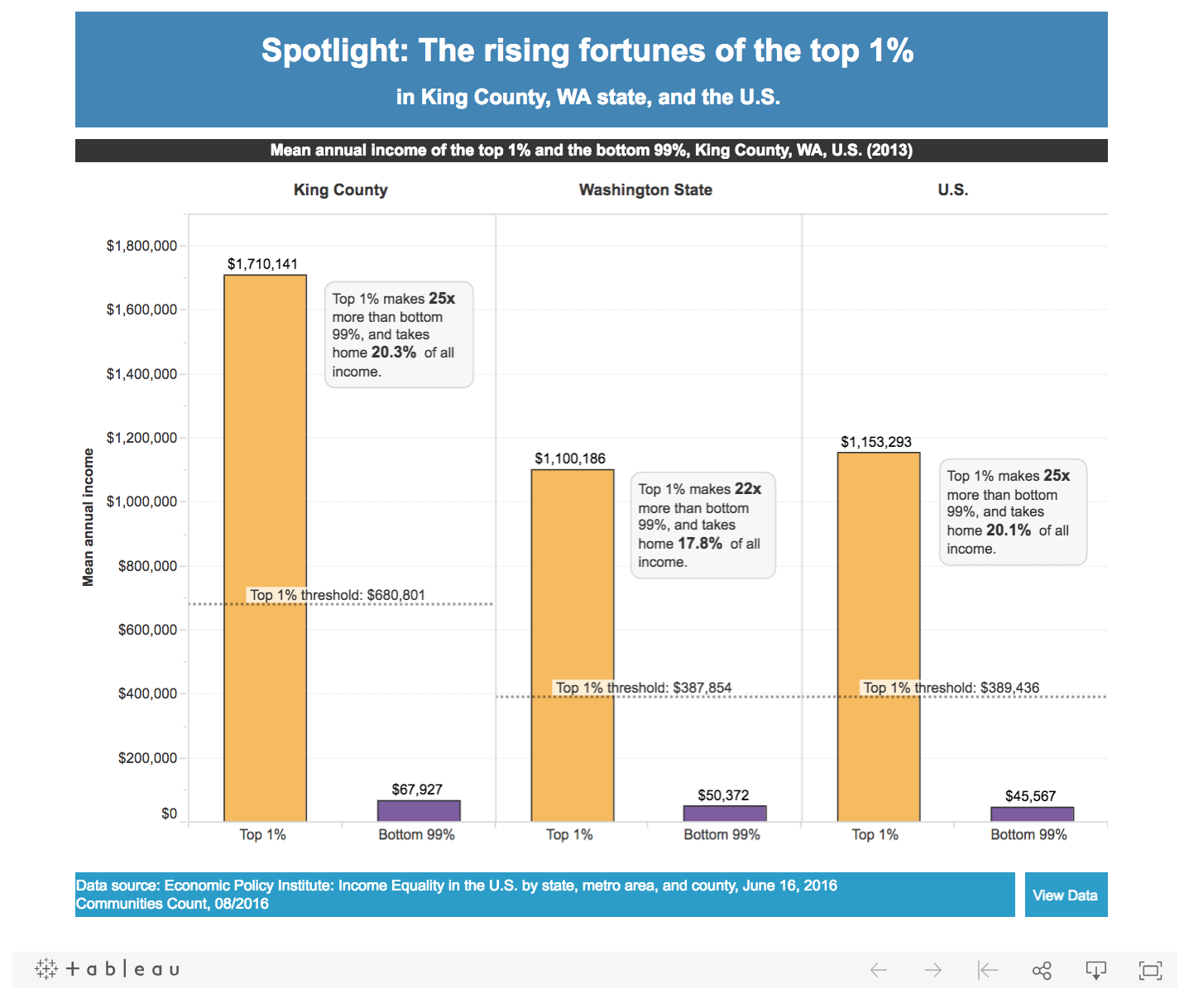
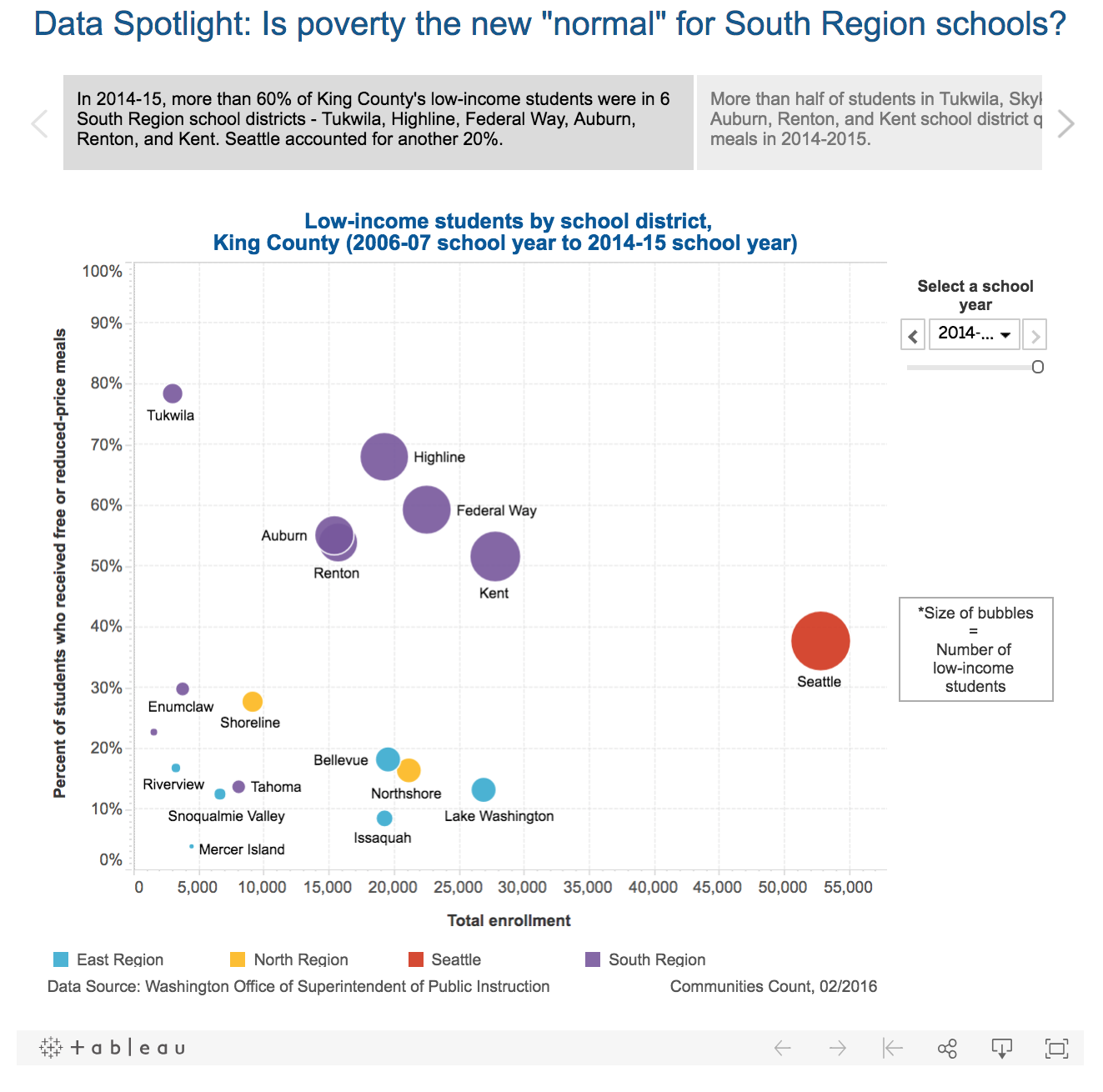
Click on our data topics section to see interactive data dashboards with key findings on health, education, food, housing and much more…