Centering Community Voices Through Community-Led Data
This blog post has been adapted from and cross-posted in partnership with the Best Starts for Kids Blog.
On Communities Count, we share lots of data and do our best to provide context through written narrative, blog posts, tools like the Health Equity Timeline, and more. A local King County initiative, Best Starts for Kids, is mirroring our commitment to combine quantitative data with community knowledge through a program called Community-Led Data.
Best Starts for Kids has partnered with three community-based organizations who have lead the process of gathering, analyzing and sharing data about their own communities since 2023. Their data strengthens community-led efforts, provides insight into what pregnant people, families, and caregivers with young children are experiencing, and is an important complement to more traditional data sources.
In 2025, community partners built upon their initial findings through ongoing engagement with communities around topics like emotional health and wellness, how cultural values inform community well-being and parenting, accessibility of services, and community safety & inclusivity. Partners shared findings with their communities through community events and presented findings to local officials.
Across the communities our partners spoke with, the findings highlight how communities incorporate cultural practices to support well-being, intergenerational perspectives about child care and parenting, community strengths and needs around mental health services, and a strong need for more environments that support belonging and community safety.
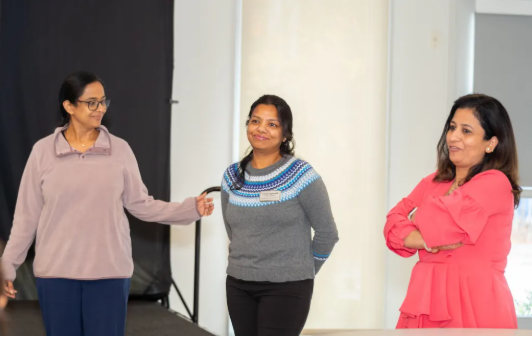
IACS serves the Indian American community through programs, services, and advocacy for people of all ages and life stages. They help seniors, youth, women, and families with the often difficult and complex circumstances that affect their daily lives. For the community-led data project, IACS held “parent teas” for families and caregivers focused on five community priorities (accessibility, safety, emergency preparedness, child nutrition, and behavior management), each across three geographically spread locations within King County (Bothell, Bellevue, and Maple Valley). They heard:
Families needed more resources for child care and transportation.
Safety concerns varied by community and ranged from school safety to racism and hate crimes.
Families appreciated culturally relevant guidance on supporting children’s development.
Read their full report and contact Kavita Ramakrishnan (kavithak@iaww.org) or Sucheta Pardikar (suchetap@iaww.org) for questions.
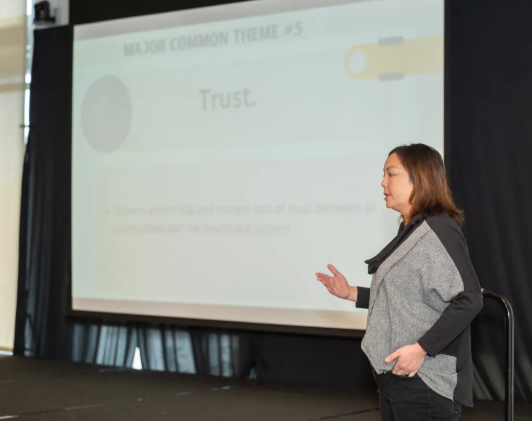
Community Cafés spotlight neighborhood wisdom and transform it into community action. They are planned and led by family members who can relate to the participants and want to build on the assets of their community to strengthen families. In this project, they partnered with 8 different communities, such as Indigenous Latinx (including Indigenous Guatemalan communities) and Uniquely Designed (parents and caregivers of children with disabilities). In 2025, they focused on emotional well-being, and across communities, they heard…
Participants described growing up in households where emotions were ignored, punished, or silenced. But children emerged as powerful teachers of emotional awareness.
Young people, immigrant communities, and fathers especially needed to feel safe: emotionally, culturally, and physically.
Participants used many positive coping strategies, but most were individual, and not system-supported. On the other hand, they experienced barriers to emotional health supports.
Read their full report here and contact Sunny Giron (Sunny@thecommunitycafe.org) with any questions.
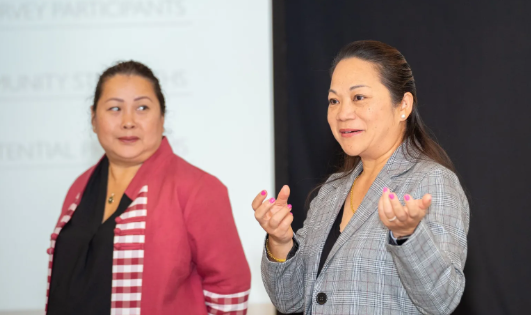
United Communities of Laos (UCL) is a community coalition that serves the Lao, Khmu, and Hmong communities in King County by providing social, cultural, and educational programs that enrich and empower families. For the community-led data project, UCL partnered with a team of Community Language Advocates to co-design and administer a survey about community needs and strengths in multiple languages. Then, they held listening sessions with pregnant women and their partners; families with young children; elders; and family members about raising children. They heard:
Prioritizing family, including elders, and teaching cultural values and traditions to children were important ways to stay connected to their culture.
Families appreciated when services were culturally relevant, and felt that there was room for improvement, especially around language access and for smaller communities.
A Hmong listening session participant shared, “Love accumulates through generations, so we actively connect our children to their extended families.”
Read their full report here and Kayla Somvilay (Kayla@lcsc-wa.org) or Tracie Friedman (friedmantracie@gmail.com) with questions.
These data highlight the strengths and needs of communities that are often rendered invisible in other widely used population data sources like vital statistics (birth and death record data) or the Behavioral Risk Factor Surveillance System. More than just filling a data gap, the richness of their insights helps us better understand the lived experiences represented by data and how to take action to improve community wellbeing. Many thanks to the Community Café Collaborative, Indian American Community Services, and United Communities of Laos for sharing their work!